
Paul Wolff
author · photographer
Paul Wolff (1887–1951) was a German photographer and physician who became a pioneer in the use of the Leica camera and the 24x36 format. After studying medicine in Strasbourg and serving as a military doctor during World War I, he settled in Frankfurt am Main where he discovered photography. He is renowned for his industrial and commercial photography, particularly in the automotive sector. In 1927, he partnered with Alfred Tritschler to form one of Germany's most prosperous photo agencies, 'Historisches Bildarchiv Dr. Paul Wolff & Tritschler.' His work was characterized by a commitment to capturing the essence of subjects—be they botanical forms or industrial machines—through precise composition and light.[1,2]
- industrial photography
- botanical studies
- Leica pioneering
- automotive photography
Books
-
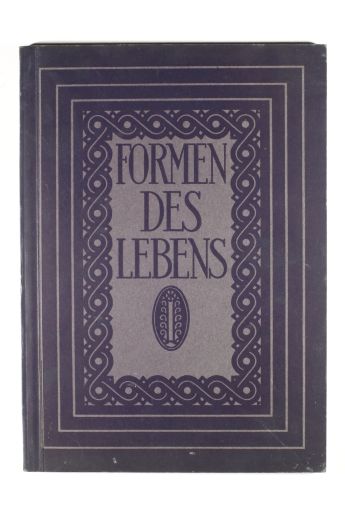 Formen des Lebens€55.00

Works by Paul Wolff
- 1931 Formen des Lebens: Botanische Lichtbildstudien First art book by Paul Wolff; published in Königstein im Taunus & Leipzig.
- 1934 Mes expériences avec le Leica Historical overview of his work with the Leica camera.
- 1936 Was ich bei den Olympischen Spielen 1936 sah Published in four languages regarding the 1936 Olympics.
- 1940 Im Kraftfeld von Rüsselsheim Industrial photography of the automotive sector.
Exhibitions
- 2019 Dr. Paul Wolff & Tritschler, Pionniers du Leica
- 2024 Dr. Paul Wolff (1887-1951) : l'Homme au Leica
- 2024 Paul Wolff : l’expérience photographique, l’image éditée