Emmy Andriesse
photographer
Emmy Andriesse (1914–1953) was a Dutch photographer renowned for her clandestine documentation of the Netherlands during the Nazi occupation. She was a significant contributor to the 'New Photography' movement and collaborated with other prominent photographers of the era, including Cas Oorthuys and Eva Besnyö.[1]
Emmy Andriesse: Documentary Urgency, Modernist Training, and the Postwar Photobook
A source-grounded account of Dutch photographer Emmy Andriesse (1914–1953), her modernist training under Paul Schuitema and Gerrit Kiljan, her clandestine Hunger Winter work with De Ondergedoken Camera, her postwar Stedelijk portraits and Van Gogh photobook, and her archive at Leiden University Libraries.
Emmy Eugenie Andriesse (1914–1953) occupies a pivotal place in twentieth-century Dutch photography: trained in the visual languages of interwar modernism, she made clandestine social reportage under Nazi occupation and then resumed a wide-ranging postwar practice encompassing reconstruction, artist portraiture, fashion, and photobooks. The WorldCat authority entity identifies her as a Dutch photographer, links her to The Hague and Amsterdam, and supplies the persistent entity URI used to disambiguate her from namesakes (WorldCat Entity). The Dutch scholarly biographical lexicon identifies her as Emmy Eugenie Andriesse, born in The Hague on 14 January 1914—the only child of liberal Jewish parents Abraham Andriesse, a travelling representative, and Else Fuld, a fashion agent—and deceased in Amsterdam on 20 February 1953 (Digitaal Vrouwenlexicon van Nederland; note that WorldCat gives 21 February 1953). On 18 June 1941 she married the graphic designer and visual artist Dick Elffers (1910–1990) in Amsterdam (Digitaal Vrouwenlexicon van Nederland).
Formation and photographic language
From 1932 to 1937 Andriesse studied advertising design at the Royal Academy of Art (Koninklijke Academie van Beeldende Kunsten) in The Hague, where photography and film formed central parts of the experimental curriculum taught by Paul Schuitema and Gerrit Kiljan (Digitaal Vrouwenlexicon van Nederland; Leiden University Libraries, Emmy Eugenie Andriesse collection). Concentrating almost exclusively on photography from her second year—earning the nickname “Emma Leica”—she lived in a communal house in Voorburg with fellow students of Schuitema and, after the outbreak of the Spanish Civil War, connected through antifascist artists’ circles with socially engaged Amsterdam photographers including Eva Besnyö, Cas Oorthuys, and Carel Blazer (Digitaal Vrouwenlexicon van Nederland).
That education grounded her early work firmly within Dutch Nieuwe Fotografie. The Huygens biography characterizes her documentary work for the periodical Ons Leven through its close attention to material texture (stofuitdrukking), unexpected camera viewpoints, and diagonal composition, noting the strong reception of her 1937 social reportage In de Jordaan at an international exhibition at the Stedelijk Museum in Amsterdam (Digitaal Vrouwenlexicon van Nederland). Before the occupation curtailed her public work, her photographs also appeared in prewar publications such as Waar Nederland trotsch op is: Hoe we tegen het water vochten en wat we er mee deden (1940).
Occupation, the Hunger Winter, and clandestine witnessing
The German occupation transformed both the conditions and the stakes of Andriesse’s practice. In 1941 the Journalistenbesluit barred her from professional press work; as a Jewish woman in a mixed marriage she was forced into hiding until late 1944, when the anthropologist Arie de Froe provided her with a forged identity card (Digitaal Vrouwenlexicon van Nederland). She joined the clandestine documentary collective later known as De Ondergedoken Camera (de illegale camera) alongside Oorthuys, Blazer, Charles Breijer, and Fritz Kahlenberg (Leiden University Libraries).
During the 1944–1945 Hunger Winter in Amsterdam, Andriesse photographed civilian starvation, foraging, and daily endurance with a concealed Rolleiflex, followed immediately in 1945 by reportages on the Allied liberation and the ruined city of Arnhem (Fotomuseum Den Haag, Emmy Andriesse (1914–1953); Leiden University Libraries). Her portrait of a malnourished child holding an empty saucepan on an Amsterdam canal—often known as Boy with a Pan (Jongen met pannetje, 1944)—became one of the defining emblems of the famine (Fotomuseum Den Haag). Immediately after liberation, these underground photographs entered print in resistance and memorial publications including the De Vrije Katheder commemorative issue Er moet veel strijd gestreden zijn (1945) and the collaborative photobook Amsterdam tijdens den Hongerwinter (Amsterdam: Contact / De Bezige Bij, 1947, with Oorthuys, Blazer, and others) (Bint Photobooks). Together with Oorthuys, Besnyö, and Blazer, she also co-founded the socially committed photographers’ association GKf (Gebonden Kunstenfederatie, photography section) after the war (Leiden University Libraries).
After 1945: commissions, portraiture, and photobooks
Despite the personal tragedy of losing her two-year-old son Cas in a drowning accident in 1945 (her second son, Joost, was born in 1946), Andriesse resumed an intensive schedule of editorial, institutional, and book commissions (Digitaal Vrouwenlexicon van Nederland). From 1947, Stedelijk Museum director Willem Sandberg commissioned her to create studio portraits of modern European artists and sculptors—monumental, often symmetrically posed portraits celebrated for their tonal richness—and she exhibited in Foto ’48 (1948) and Photographie (1952) at the Stedelijk (Digitaal Vrouwenlexicon van Nederland; Leiden University Libraries). She simultaneously photographed fashion for Metz & Co and Dutch designers Max Heymans and Benno Premsela, travelled across France, Belgium, England, and Italy (later gathered in Sestri Levante 1950, 2005), and collaborated with Cas Oorthuys on photobooks for Uitgeverij Contact (Leiden University Libraries).
In 1951 publisher Bert Bakker and art historian W. Jos de Gruyter commissioned Andriesse to photograph the landscapes and people of Provence and Brabant in the footsteps of Vincent van Gogh (Leiden University Libraries; Digitaal Vrouwenlexicon van Nederland). She fell seriously ill with cancer before completing the final trips and died in Amsterdam in February 1953 at the age of thirty-nine, shortly before De wereld van Van Gogh (The World of Van Gogh, designed by Dick Elffers) was published in 1953, with later editions appearing in 1957 and 1990 (Digitaal Vrouwenlexicon van Nederland). Posthumous civic and corporate photobooks continued to draw on her work—including Amsterdam as a Centre of Culture (Amsterdam Municipal Printing Office / Stadsdrukkerij, 1954), Beeldroman (1956), and De grond waarop wij staan for Linoleum Krommenie (1960)—and in 1955 Edward Steichen selected her work for The Family of Man at the Museum of Modern Art in New York (Digitaal Vrouwenlexicon van Nederland).
Archive and afterlife
In 1962 Leiden University Libraries acquired Andriesse’s estate from Dick Elffers: approximately 14,000 6×6 negatives, more than 1,000 35mm negatives, 21 thematic contact albums (organized by subjects including Hongerwinter/bevrijding, Arnhem, Mode, Mensen aan het werk, Amsterdam, Beeldhouwers, Kinderen, and Vincent van Gogh), roughly 1,730 prints, and inventory notebooks (Leiden University Libraries). Subsequent museum exhibitions and monographs—including Emmy Andriesse: Foto’s 1944/52 (Rijksmuseum Vincent van Gogh, 1975/1977), Hripsimé Visser and Flip Bool’s monograph Emmy Andriesse (1914–1953) (1994/1995), the 2003 Fotomuseum Den Haag retrospective and companion volume Holland zonder haast (Voetnoot, 2003), Emmy Andriesse: Arnhem September ’45 (Waanders, 2006), and Louise Baring’s Emmy Andriesse: Hidden Lens (Schilt, 2013)—have drawn on this archive to present her war reportage and her modernist book and portrait work as a unified body of practice (Fotomuseum Den Haag; Leiden University Libraries).
Sources
Books
-
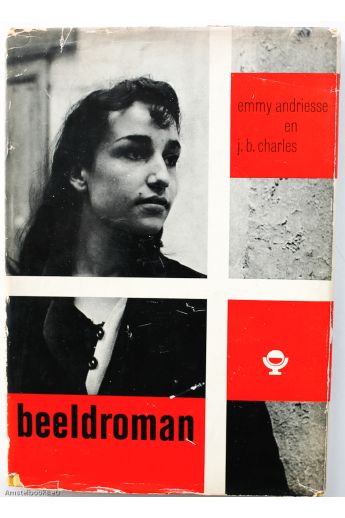 Beeldroman€65.00
-
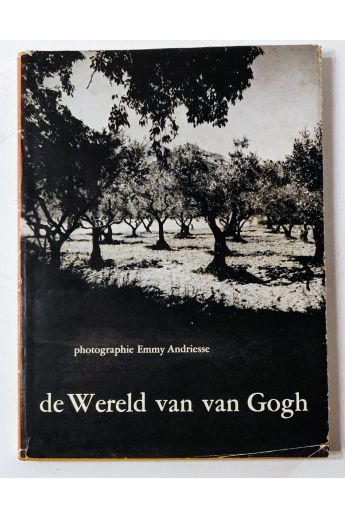 De wereld van van Gogh€35.00
-
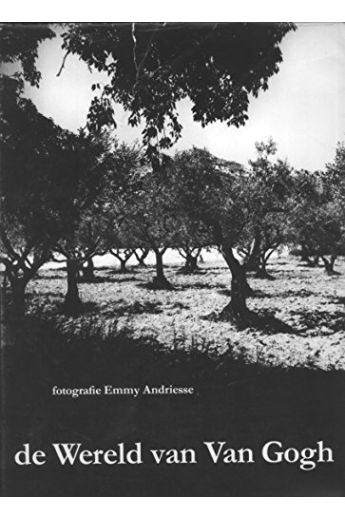 World of Van Gogh€14.00


Works by Emmy Andriesse
- 1954 Amsterdam as a center of culture Photography by Emmy Andriesse.
References
- E. Straat. Amsterdam as a center of culture. The Municipal Printing Office of Amsterdam. 1954