
Henri Cartier-Bresson
author · photographer
Henri Cartier-Bresson was a pioneering French humanist photographer and artist, widely considered one of the most influential figures in 20th-century photojournalism. He was an early adopter of the 35mm camera, which facilitated his signature style of candid street photography. Cartier-Bresson is most famously associated with the concept of "the decisive moment"—the precise instant when visual elements of a scene align to create a meaningful composition. As a co-founder of the Magnum Photos agency, he chronicled global events, including the Spanish Civil War and the liberation of various territories. His work is characterized by a preference for uncropped images and a keen eye for both human emotion and geometric structure. His publications, including "The Decisive Moment" and "The Mind's Eye," remain foundational texts for students of the medium.[1,2,3,4,5]
- The Decisive Moment
- Candid Photography
- Street Photography
- Humanism
- Travel Photography
Henri Cartier-Bresson and the Book of the Decisive Moment
A sourced account of Henri Cartier-Bresson’s institutional legacy, Magnum formation, and the 1952 book represented in the catalogue.
Henri Cartier-Bresson is identified by the Museum of Modern Art as a French artist, 1908–2004; its artist record makes 309 works available online. That institutional collection evidence aligns with the Fondation Henri Cartier-Bresson chronology, which dates his birth to 22 August 1908 in Chanteloup, Seine-et-Marne, and his death to 3 August 2004. Together these sources distinguish the photographer named in the catalogue from namesakes and ground the account in museum and archive records.
Cartier-Bresson’s formation was not limited to photography. The Foundation records study with André Lhote in 1926, the purchase of his first Leica in 1931–32, and an initial New York exhibition at the Julien Levy Gallery in 1933. The Magnum Photos profile likewise describes an early interest in painting and Surrealism, and identifies the Leica as the camera he adopted after 1932. These details help explain why accounts of his work often attend to both the organisation of a frame and the contingency of an encounter, without reducing the photographs to a slogan.
In 1947 Cartier-Bresson helped establish Magnum Photos with Robert Capa, David Seymour, William Vandivert, and George Rodger, according to both Magnum and the Fondation chronology. The same chronology records travel in India, China, and Indonesia from 1948 to 1950, while Magnum notes that he returned to Europe in 1952 after three years in the East.
The catalogue connection: The Decisive Moment
The linked catalogue book is The Decisive Moment, the English-language counterpart to Images à la Sauvette. The Fondation’s chronology dates the French book to 1952, names Tériade as publisher, and records its Matisse cover. Magnum explicitly states that Images à la Sauvette appeared in English as The Decisive Moment in 1952. This places the catalogue copy within a contemporaneous bilingual publication history rather than treating the English title as a separate project.
The book is important because it gathers Cartier-Bresson’s ideas about photographic practice in a publication that travelled with his work. Magnum preserves his description of the camera as “a sketch book” and an instrument of intuition and spontaneity; that is a useful primary-source framing for the title, though it should not be taken as a mechanical recipe for interpreting every image. The catalogue’s first-edition record gives the specific copy its bibliographic context; the institutional sources establish the book’s 1952 origin and relation to Images à la Sauvette.
By 1974 Cartier-Bresson had ended his active working relationship with Magnum and concentrated on drawing, as the Fondation chronology records. In 2003 he helped create the Fondation Henri Cartier-Bresson in Paris to preserve his work; Magnum reports the same purpose. The MoMA record, the Fondation’s archive, and Magnum’s profile therefore show a career with a continuing institutional presence, while The Decisive Moment remains the catalogue’s direct point of entry into that career.
Sources
Books
-
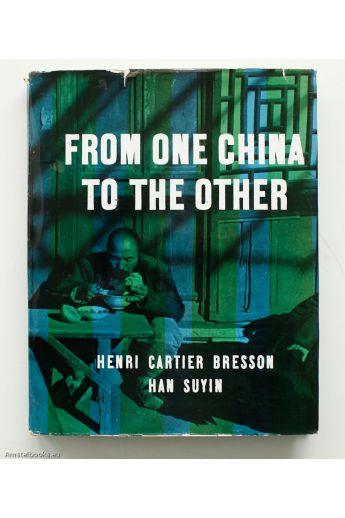 From one China to the other€45.00
 -
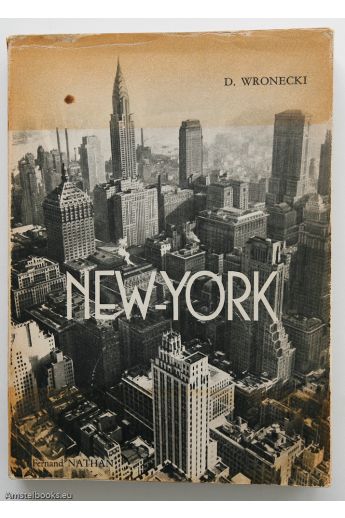 New-York€85.00
 -
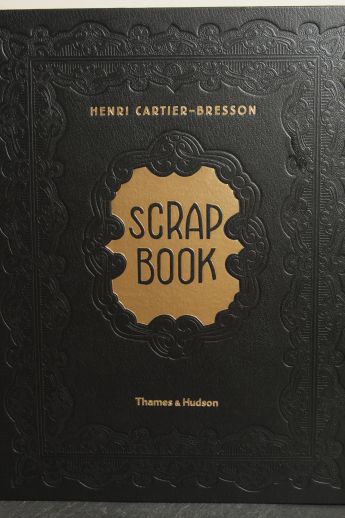 Scrapbook€44.00
 -
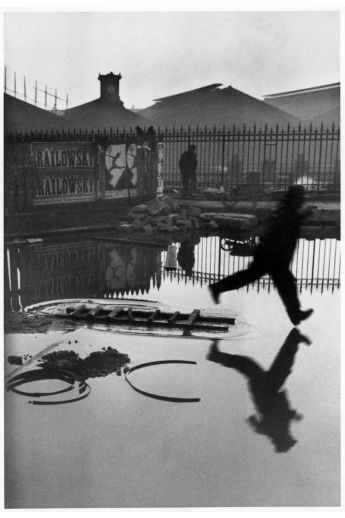 The Decisive Moment€226.00
 -
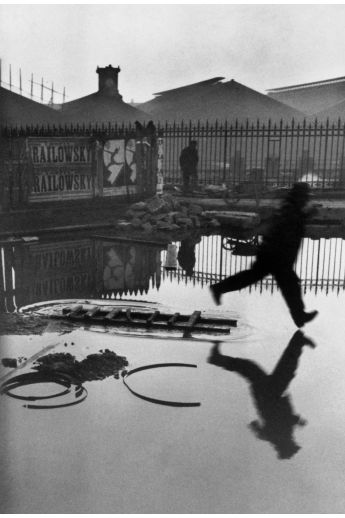 The Europeans€203.00
 -
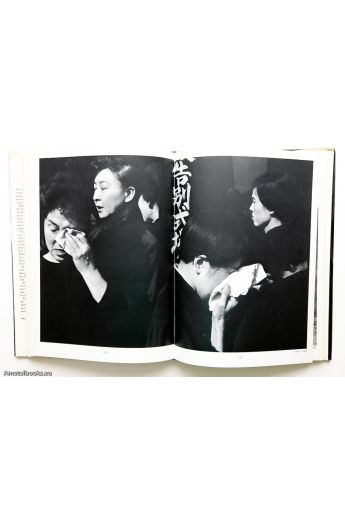 The Face of Asia€15.00
 -
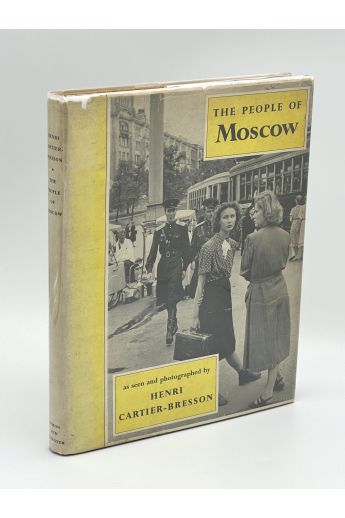 The People of Moscow€45.00


Works by Henri Cartier-Bresson
- 1952 The Decisive Moment
- 1964 The Eye of the Camera
- 1999 The Mind's Eye: Writings on Photography and Photographers
Works about Henri Cartier-Bresson
- Henri Cartier-Bresson: A Biography
Exhibitions
- 2003 De qui s'agit-il ?