
Johan van der Keuken
photographer
Johan van der Keuken (born Joan) was a prominent Dutch photographer and filmmaker. He gained early recognition in the mid-1950s for his evocative black-and-white photography, often characterized by its poetic and intimate atmosphere. His work frequently explored themes of youth, alienation, and daily life. Beyond photography, he was an accomplished film director, known for works such as 'De oude dame' (1963). He is noted for his distinctive visual style that blended documentary realism with a lyrical sensibility.[1,2]
- youth
- alienation
- daily life
- poetry in photography
Johan van der Keuken: The Photobook as a Moving Image
A study of Johan van der Keuken’s intertwined work in photography, photobooks and documentary film, from the adolescent portraits of Wij zijn 17 and Achter Glas to Paris mortel, his mature experiments with sequence and framing, and the archives that preserve his legacy.
Johan van der Keuken (Amsterdam, 4 April 1938–7 January 2001) occupied an unusual place between still photography and documentary cinema. He did not simply move from one medium to the other. Across photographs, books, films and installations, he kept returning to the same problems: how a frame cuts into reality, how one image changes beside another, and how an artist can acknowledge that every viewpoint excludes alternatives. The Getty Union List of Artist Names identifies him as the Dutch filmmaker and photographer born in 1938 and records both “Johan” and the earlier “Joan” as forms of his name (ULAN 500339196). Those identity details accord with the exact Amsterdam life dates and career described by the Maison Européenne de la Photographie, which holds more than 300 of his prints.
A camera at twelve, a book at seventeen
Van der Keuken began photographing at twelve. The detailed biographical study by Jenny Smets in Leiden University’s Depth of Field traces his initiation to his amateur-photographer grandfather and records that he first used a box camera, then a Rolleicord to photograph school friends in Amsterdam. At seventeen he shaped thirty of those portraits into Wij zijn 17 (We Are 17, 1955), with a foreword by Simon Carmiggelt. The book’s subdued image of postwar adolescence provoked letters, radio and television discussion, and even cheerier counter-publications, according to the Leiden scholarly profile.
That reaction matters because Wij zijn 17 was more than a precocious debut. Its teenagers appear neither as social types nor as advertisements for youthful optimism. Their inwardness, boredom and self-conscious poses give the sequence its emotional force. A 2022 retrospective at the Nederlands Fotomuseum described Van der Keuken’s three early photobooks as canonical works distinguished by poetic montage; surviving layout dummies for Wij zijn 17 and Paris mortel show how deliberately he tested the placement and cropping of prints. The page, rather than the individual photograph alone, was already his working space.
His second book, Achter Glas (Behind Glass, 1957), concentrated on the twins Georgette and Yvonne Apol, with a text by Remco Campert. The Maison Européenne de la Photographie’s 2006 retrospective emphasizes how both early books addressed adolescents, a group then rarely represented in this way. In Achter Glas, the sisters’ daydreaming behind a window turns an ordinary domestic setting into a state of suspension between childhood and adulthood. The glass is at once a physical surface, a frame within the frame and a metaphor for distance.
Paris: learning film, making photographs
A government scholarship took Van der Keuken to the Institut des Hautes Études Cinématographiques (IDHEC) in Paris from 1956 to 1958. Although he was studying cinema, he made thousands of photographs in the city. These became Paris mortel (1963), his third major photobook. The title announces a refusal of the timeless, romantic Paris of tourism. The MEP’s account describes six sequences—including the Métro, street portraits, military parades and Père-Lachaise cemetery—in which a dark atmosphere intensifies toward the city’s mortality and redirects attention to working, industrial Paris.
The prints themselves survive in museum collections: the MEP lists, for example, Le 14 juillet 1958, Île Saint-Louis from the Paris Mortel series, while the Centre Pompidou’s record of its 1987 exhibition characterizes the Paris pictures as street scenes and abandoned places rendered in expressionistic, strongly contrasted black and white. The book’s later reconstruction also demonstrates how much meaning lay in editing. A review of Paris Mortel retouché in Conscientious Photography Magazine (accessed 25 July 2026) notes that the publication places Van der Keuken’s third dummy beside the finished book and unpublished photographs, making changes in selection and layout available for study. Paris mortel is therefore not only a record of a city but an argument made through sequence, scale, rhythm and omission.
The still image and the moving frame
From the early 1960s film became Van der Keuken’s principal public medium, but photography did not disappear. MoMA’s bio-filmography records the continuous alternation: the three early books; artist films on Yrrah, Tajiri, Opland and Lucebert; Blind Child (1964) and Beppie (1965); later films including The Eye Above the Well (1988), Face Value (1991), Brass Unbound (1993) and Amsterdam Global Village (1996); and books such as Seeing, Watching, Filming (1980) and After Image (1991). The same chronology shows that he was usually his own cameraman.
The relation between the media was structural. Smets’s Leiden essay explains that Van der Keuken treated both photograph and film as framed, flat constructions that can only offer partial views of real space. A photograph makes its cut appear final; film can break that apparent stillness by moving to another view. He often answered the authority of the single frame with series, changed viewpoints, second frames inside pictures, and sequences in which time and space could be compared. His photographs became quieter and more reflexive while his films increasingly addressed power, inequality and North–South relations, yet both practices remained concerned with how images produce rather than merely transmit meaning.
That method helps explain why the photobook was so natural to him. A book fixes photographs to pages but activates them through turning, repetition and juxtaposition. Eye Filmmuseum describes how he made photographs “move” by arranging them as series and visual stories, and how he placed contrasting observations from Africa, Asia and Latin America beside scenes closer to home. For Van der Keuken, montage did not manufacture a single verdict. It allowed differences, echoes and contradictions to remain visible.
His films likewise resisted a simple claim to documentary transparency. The Centre de Cultura Contemporània de Barcelona calls them travel essays that stage a dialogue between reality and its representation while reflecting on the filmmaker’s own position. Eye similarly stresses that he approached events from several angles because no single image of reality exists. This reflexive stance did not weaken his social engagement; it made the maker’s choices part of what the work asks viewers to examine.
Return, expansion and installation
Photography regained an independent public role in Van der Keuken’s career from the late 1970s. The Leiden chronology records his inclusion in the Stedelijk Museum’s Fotografie in Nederland 1940–1975 in 1978, followed by a Stedelijk exhibition of photographs from 1955–1980, a Centre Pompidou survey in 1987 and a 1953–1988 retrospective at the Centraal Museum. In later work he experimented with multiple photographs, layered exposures and installations that occupied space between cinema and the singular print.
His own account for the MEP exhibition Le Corps et la Ville described years spent at the border of photography and film, linking pictures through agreements and contradictions of story, framing, composition, colour, motion and light. The MEP exhibition text presents projects such as Amsterdam / Two Streets as parallel tracks of photographs that meet like streets, while the museum’s 2006 retrospective locates his installations “between fixity and chaos, surface and simultaneity.” These were not late departures from the photobook so much as its sequencing logic enlarged to architectural scale.
Archives and a continuing photobook legacy
Van der Keuken’s work is unusually well preserved across complementary institutions. Eye holds nearly his complete film oeuvre and reports having restored forty films in their original format. The Maison Européenne de la Photographie preserves more than 300 prints, including works from Wij zijn 17, Achter Glas and Paris mortel. In 2019 his widow Noshka van der Lely donated an archive of negatives, slides and drawings to the Nederlands Fotomuseum; that museum’s 2022–23 retrospective brought together about 200 photographs, contact sheets, book proofs and film excerpts from several collections.
For readers and collectors, the early books remain the clearest entry into his practice. Wij zijn 17 turns adolescent portraiture into a collective mood; Achter Glas makes interior space and reverie inseparable; Paris mortel converts years of looking at Paris into a rigorously paced counter-myth of the city. Later volumes—among them Zien Kijken Filmen, After-image / Nabeeld and posthumous reconsiderations such as Paris mortel retouché—show that photographs, writings, dummies and films belong to one sustained inquiry. Van der Keuken’s achievement was not to reconcile stillness and movement once and for all, but to keep their tension productive: every frame is a decision, every sequence a chance to see that decision differently.
Books
-
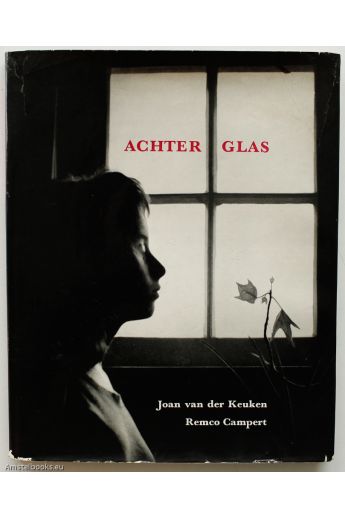 Achter glas€110.00
 -
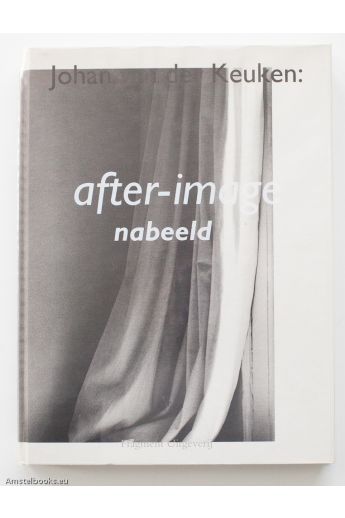 after-image / nabeeld€22.00
 -
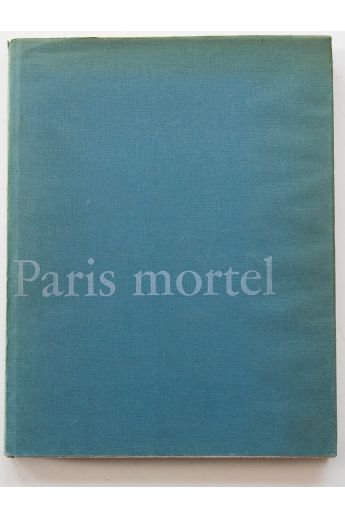 Paris Mortel€600.00
 -
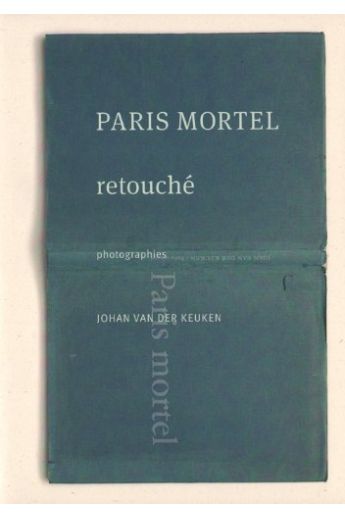 Paris mortel retouché€100.00
 -
 Quatorze juillet€54.00
 -
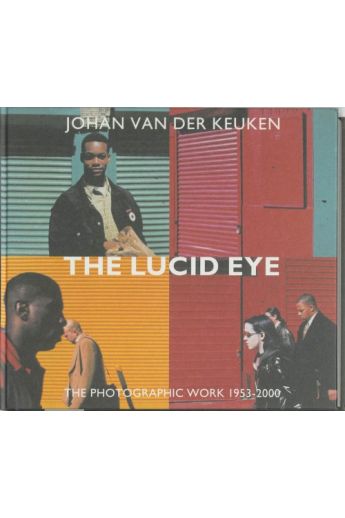 The Lucid Eye€30.00
 -
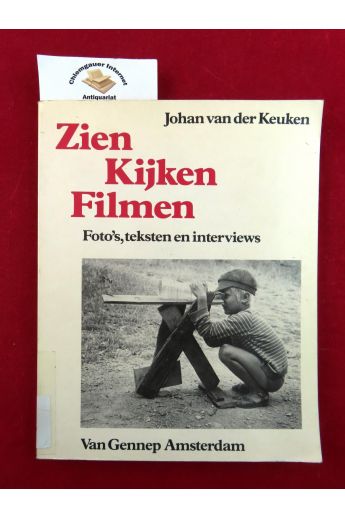 Zien Kijken Filmen€15.00


Works by Johan van der Keuken
- 1961 Achter Glas Photographs by Johan van der Keuken with text by Remco Campert.
- 1955 Wij zijn 17 First book by Joan van der Keuken.
- 1963 Paris mortel Photographs by Johan van der Keuken.