
Lewis Baltz
author · photographer
Lewis 'Duke' Baltz (1945–2014) was a prominent American visual artist, photographer, and educator. He is widely recognized as a key figure in the New Topographics movement of the late 1970s, which explored the impact of human industrialization on the natural landscape. His work often focuses on suburban expansion, corporate architecture, and industrial sites, utilizing large-format cameras to capture the structural relationship between humans and their built environments. Baltz received his BFA from the San Francisco Art Institute in 1969 and an MFA from the Claremont Graduate School in 1971. He held teaching positions at various institutions including Yale University and the École Nationale Supérieure des Beaux-Arts. His photography is noted for its critical examination of documentary discourse and its role in establishing conceptual photography as a significant part of contemporary art.[1,2,3,4,6]
- New Topographics
- industrial architecture
- suburban expansion
- human landscape
- corporate architecture
Lewis Baltz and the Man-Altered Landscape
Lewis Baltz (1945–2014) made the ordinary structures of industrial and suburban development central to a rigorous rethinking of American landscape photography.
Lewis “Duke” Baltz (1945–2014) was an American photographer, artist, and teacher whose controlled pictures of tract housing, industrial parks, warehouses, and construction sites changed the terms of landscape photography. The Whitney Museum identifies him as an artist, lecturer, and photographer and confirms his participation in the pivotal 1975 exhibition New Topographics: Photographs of a Man-Altered Landscape at George Eastman House. His exact birth and death dates—12 September 1945 and 22 November 2014—are also recorded in his VIAF authority record.
Education and New Topographics
Born in Newport Beach, California, Baltz studied at the San Francisco Art Institute and earned an MFA from Claremont Graduate School in 1971 (International Center of Photography). He emerged at a moment when photographers were redirecting landscape photography away from wilderness and toward the ordinary built environment.
That redirection was crystallized by New Topographics. Baltz’s subjects—industrial margins, newly built homes, service structures, and suburban infrastructure—made the “man-altered” landscape impossible to treat as a neutral backdrop. The Whitney notes that his series included industrial parks, warehouses, construction sites, recreational areas, and centers of technological and scientific research (Whitney Museum).
Precision without neutrality
Baltz’s early black-and-white photographs are often frontal, quiet, and serial. Their restraint can look neutral, but the repeated walls, seams, lots, and standardized buildings make decisions about land use and construction visible. In The Tract Houses, for example, he photographed new homes under construction near Los Angeles between 1969 and 1971; the Whitney describes the series’ deadpan manner and its exposure of cheap construction and banal details (Whitney Museum).
The Prototype Works similarly isolate geometric fragments found in the postwar industrial landscape. The National Gallery of Art later exhibited 83 photographs from that series together with Ronde de Nuit, a mural-sized twelve-panel color work. The pairing makes an important distinction in Baltz’s career: the small gelatin-silver works of the early period should not be conflated with the large-scale color installations he produced later.
Editor as well as photographer
The publication described here, Contemporary American Photographic Works, documents another side of Baltz’s practice. A bibliographic listing identifies “Lewis Baltz (ed)” and records the book as a 1977 softcover published by the Museum of Fine Arts, Houston (Moe’s Books). It is therefore more accurate to describe Baltz as the volume’s editor than to infer an unsupported curatorial or contributing role from the title alone.
The publication places his photographic activity alongside the work of framing and organizing contemporary practice. That editorial role suits an artist whose own series depend on selection, repetition, and sequence: meaning arises not only in a single façade or empty lot but in the relation between images.
Teaching and legacy
Baltz taught at the California Institute of the Arts, University of California campuses at Riverside and Santa Cruz, Yale, the École Nationale Supérieure des Beaux-Arts in Paris, and the Art Academy of Helsinki (International Center of Photography). His teaching extended an approach to photography that treated the medium as a critical way of examining development, institutions, and representation.
Baltz’s work remains urgent because logistics zones, corporate architecture, expanding suburbs, and technological infrastructure continue to organize daily life. His achievement was not simply to photograph uncelebrated places, but to show how formally ordered images could reveal the systems embedded in them. Contemporary American Photographic Works adds the useful perspective of Baltz as an editor and participant in the photographic discourse of his time.
Sources
Books
-
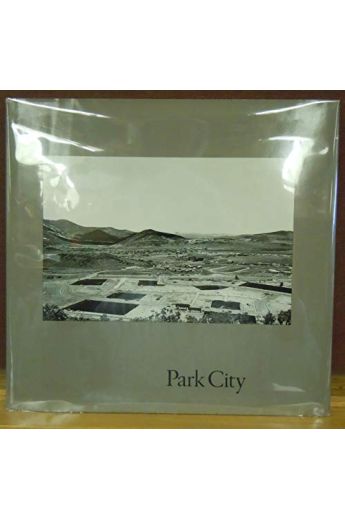 Park City€180.00
 -
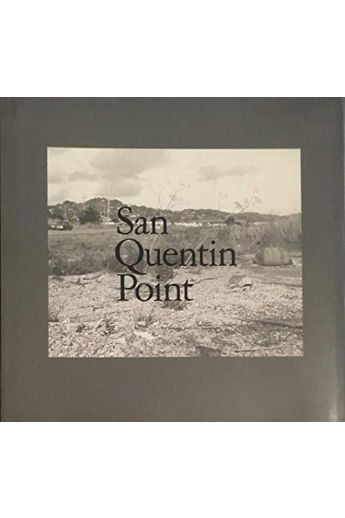 San Quentin Point€224.00


Works by Lewis Baltz
- 1977 Contemporary American photographic works Exhibition catalogue featuring remarks by the curator Lewis Baltz.
Exhibitions
- 1971 The Crowed Vacancy: Three Los Angeles Photographers
- 1975 New Topographics: Photographs of a Man-Altered Landscape