
Robert Frank
author · photographer
Robert Frank was a Swiss-American photographer and documentary filmmaker, widely regarded as one of the most influential figures in the history of 20th-century photography. Born in Zurich in 1924, Frank emigrated to the United States in 1947, where he initially worked in fashion photography for Harper's Bazaar. He is most celebrated for his seminal photobook, 'The Americans' (1958/1959), which captured a gritty, melancholic, and nuanced outsider's view of postwar American society. Frank's work was pivotal in redefining the aesthetic of documentary photography, moving away from romanticism toward a more raw and personally expressive visual language. He was associated with the 'Beat Circle' and is noted for his ability to capture the alienation and heartbreak of the American landscape.[1,2,3,4]
- Americana
- alienation
- postwar American landscape
- documentary
- melancholy
Robert Frank and Les Américains
A sourced account of Swiss-American photographer Robert Frank (1924–2019), his 1955–1956 Guggenheim road trip, the 1958 Delpire first edition Les Américains, and its 1959 Grove Press edition The Americans.
The photographer is securely identified by the New York Public Library’s Photographers’ Identities Catalog (PIC ID 4829): Robert Frank (Robert Louis Frank), a Swiss-American photographer and film/video artist, born in Zürich on 9 November 1924 and deceased in Inverness, Nova Scotia, on 9 September 2019. PIC links his record to Getty ULAN and VIAF, and the Whitney Museum of American Art independently identifies the artist as Robert Frank (1924–2019) under Getty ULAN identifier 500019916 and Wikidata Q467574.
Born into a Jewish family in Zürich, Frank trained from 1940 to 1941 as an apprentice in a Basel photographic studio and worked for Gloria Films in Zürich before assembling his first hand-made photobook, 40 Fotos, in 1946 (Whitney Museum; Wikipedia: Robert Frank). He emigrated to the United States in 1947, settling in New York City, where he worked as a fashion photographer for Harper’s Bazaar under art director Alexey Brodovitch. Between 1948 and 1953 he travelled extensively in Peru, Bolivia, England, Wales, France, and Spain—work that shaped later photobooks including Black White and Things (first conceived as maquettes in 1952, published by the National Gallery of Art and Scalo in 1994), London/Wales (Scalo, 2003), and Paris (Steidl, 2008)—and contributed seven photographs to Edward Steichen’s 1955 Museum of Modern Art exhibition The Family of Man (Whitney Museum; Wikipedia).
From Les Américains (1958) to The Americans (1959)
In 1955, supported by recommendations from Walker Evans, Edward Steichen, and Alexey Brodovitch, Frank received a fellowship from the John Simon Guggenheim Memorial Foundation to travel across the United States and photograph its social landscape (Whitney Museum). Purchasing a used Ford coupe, he crisscrossed the country over 1955–1956—from Detroit, Chicago, and Savannah to New Orleans, Houston, Los Angeles, and Butte, Montana—exposing more than 700 rolls of 35mm film (roughly 28,000 frames) (Whitney Museum; Wikipedia). From that material, Frank edited a sequence of 83 photographs structured around recurring American emblems—flags, automobiles, jukeboxes, diners, roadside crosses, and politicians—and attentive to racial segregation, class division, and postwar alienation.
Because American publishers initially balked at the book’s bleak tone and unconventional grain, blur, and off-kilter framing, the project first appeared in Paris in 1958 as Les Américains, published by Robert Delpire as the fifth volume in his Encyclopédie Essentielle series (Wikipedia). In Delpire’s 1958 French edition, Frank’s 83 photographs were paired on facing pages with an anthology of texts on American history and politics selected by Alain Bosquet from writers including Simone de Beauvoir, William Faulkner, Henry Miller, John Steinbeck, and Alexis de Tocqueville. Only the following year, in 1959, did Grove Press issue the first American edition under the title The Americans, replacing the French political commentary with an introduction by Beat writer Jack Kerouac and brief location captions (Wikipedia).
The National Gallery of Art documented the full genesis of both editions in its 2009 fiftieth-anniversary exhibition Looking In: Robert Frank’s "The Americans", curated by Sarah Greenough, which brought together all 83 vintage prints alongside contact sheets, work prints, letters from Walker Evans and Jack Kerouac, and the 1958 Delpire and 1959 Grove Press editions. In 2008, to mark the fiftieth anniversary of Les Américains, Steidl and Frank initiated a new printing of The Americans using uncropped scans and substituting alternate frames for two images (Wikipedia). After 1959, Frank turned increasingly toward experimental cinema (beginning with Pull My Daisy, 1959), Polaroid collages, and autobiographical photobooks such as The Lines of My Hand (1972/1989), Moving Out (1994), Thank You (1996), Flamingo (1997), Hold Still—Keep Going (2001), and Storylines (2004), dividing his time from 1969 onward between New York City and Mabou, Nova Scotia, with his wife, the artist June Leaf (Whitney Museum).
Sources
Books
-
 A Dialogue With Solitude€206.00
-
 Black white and things€45.00
-
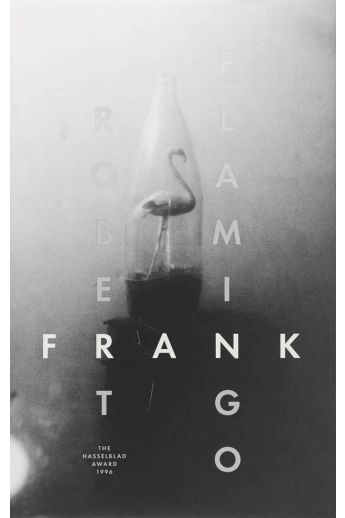 Flamingo€8.00
-
 Hold still - keep going€15.00
-
 Les Américains€1,900.00
-
 London/Wales€41.00
-
 Moving Out€13.00
-
 New York to Nova Scotia€45.00
-
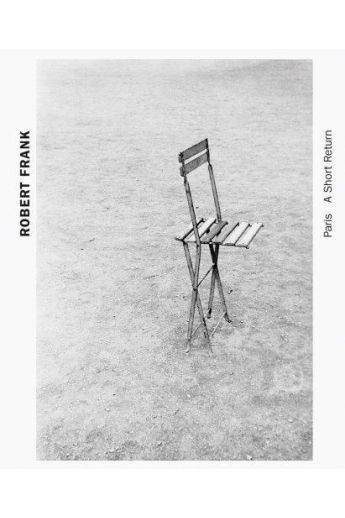 Paris€16.00
-
 Storylines€37.00
-
 Thank you€32.00
-
 The Americans€19.00
-
 The Americans€38.00
-
 The Lines of my Hand€50.00


Works by Robert Frank
- 1958 The Americans First published in France in 1959.
- 1946 40 Fotos Handmade book.
- 1994 Black white and things
- 1981 Robert Frank: Thirteen Pictures of New York
Works about Robert Frank
- 2017 American Witness: The Art and Life of Robert Frank Unauthorized biography.
Exhibitions
- 2019 Robert Frank. Unseen
- 1981 Robert Frank
- 1981 Robert Frank: Thirteen Pictures of New York
References
- Robert Frank. Wikipedia. Wikimedia Foundation link
- Robert Frank. The Museum of Modern Art link
- Robert Frank. Encyclopedia Britannica. Encyclopædia Britannica link
- Biography and Bibliography. Robert Frank Foundation link
- RJ Smith. American Witness: The Art and Life of Robert Frank. Da Capo Press. 2017 link