
Ed van der Elsken
author · photographer
Eduard (Ed) van der Elsken was a Dutch photographer and filmmaker, recognized as a pioneer of street photography. He is best known for his work in Paris during the 1950s, where he captured the everyday life of the city and the bohemian atmosphere of Saint-Germain des Prés. In 1954, he contributed the visual narrative 'Beeldroman van het alledaagse' (Visual Novel of the Everyday) to the Drukkersweekblad Autolijn Christmas issue. His work often explored human interaction and urban atmosphere, and he is celebrated for his influential photo books and cinematic style.[1,2,3,5,6,7,8]
- street photography
- cinema
- human interaction
- urban life
Ed van der Elsken: The Camera Inside the Crowd
A critical biography of Dutch photographer and filmmaker Ed van der Elsken, tracing his formation in postwar Amsterdam, the cinematic photobook Love on the Left Bank, his travel and jazz books, his participatory street practice, experimental films, and the archive-led reassessment of his working methods.
Ed van der Elsken (1925–1990) made photography feel less like observation from a safe distance than an encounter already in progress. Across Paris bars, Amsterdam streets, Japanese cities, jazz clubs, family rooms and the fields around Edam, his pictures disclose the photographer as a participant: teasing, admiring, provoking, sometimes directing, and always visibly implicated in what unfolds. His principal achievement was not simply a recognisable street style. It was a body of books, films and photographs in which the charged exchange between camera and subject became the work’s real subject.
Identity and beginnings
Ed van der Elsken is securely identifiable as Eduard van der Elsken, born in Amsterdam on 10 March 1925 and deceased in Edam on 28 December 1990. Getty’s Union List of Artist Names records the preferred form “Elsken, Ed van der,” variant forms including Eduard and Edward, and the roles photographer, filmmaker and cinematographer; the New York Public Library’s Photographers’ Identities Catalog independently links the same 1925–1990 Dutch photographer to Getty ULAN, VIAF, RKD, MoMA and major photographic collections (Getty ULAN; NYPL Photographers’ Identities Catalog). The Bibliothèque nationale de France supplies the precise Amsterdam and Edam life dates and identifies photography as his domain (BnF authority record). These concordant authority records distinguish him from cataloguing variants such as “Ed Elsken” or “Edward van der Elsken.”
Van der Elsken initially wanted to become a sculptor and briefly attended Amsterdam’s School of Applied Arts during the German occupation. After hiding from forced labour and working with a wartime mine-clearance service, he returned to Amsterdam and moved through electrical training, a correspondence photography course, print-shop work and darkroom jobs. In 1947 he began photographing Amsterdam street life with his father’s plate camera; by 1949 he had entered the circle of the GKf photographers and worked with Ad Windig. Evelyn de Regt’s extensive Leiden University PhotoLexicon study shows that his formation was practical and irregular rather than academic: technical work, looking, printing and roaming the city mattered more than formal instruction (Leiden University, Depth of Field).
Paris and the invention of a photographic novel
In 1950 Van der Elsken moved to Paris, briefly making test prints at Pictorial Service, the laboratory used by Magnum photographers. He soon left the lab for the streets and the cafés of Saint-Germain-des-Prés, where he became close to a multinational group of young bohemians. This proximity produced the photographs that established his career. Edward Steichen selected eighteen images for MoMA’s 1953 exhibition Post-War European Photography; MoMA’s institutional record also places Van der Elsken in The Family of Man in 1955 (Leiden University, Depth of Field; Museum of Modern Art).
The decisive form for the Paris material was not an exhibition print but a sequence. Published in 1956, Een liefdesgeschiedenis in Saint Germain des Prés—known in English as Love on the Left Bank—combined documentary photographs with a semi-fictional love story. Van der Elsken cast the Australian artist Vali Myers as “Ann” and arranged lived moments into a narrative of desire, jealousy and postwar drift. The Stedelijk Museum emphasises the book’s flashbacks and changing viewpoints: its cinematic construction both characterised his visual thinking and anticipated his later filmmaking (Stedelijk Museum Amsterdam).
That mixture of fact, performance and editing is crucial. The book did not pretend that photographs were transparent evidence. It transformed a real social world through casting, sequencing, captions and dramatic point of view. Writing in Aperture, Sean O’Hagan calls it a world “both real and created,” locating its force in the meeting of documentary and staged narrative and in its early image of rebellious youth culture (Aperture). A later Frieze review describes its “theatrical documentary”: blurred, grainy episodes are intercut with portraits, mirrors and glances, while identifiable members of the Letterist milieu anchor the story in a specific history (Frieze). The book’s lasting importance lies in precisely that tension. Van der Elsken was neither an invisible reporter nor a pure fiction-maker; he used the photobook to turn participation into narrative.
Books as the centre of the work
Love on the Left Bank was the first of roughly twenty photobooks, followed by projects that continually changed scale and subject. Bagara (1958) grew from travel in French Equatorial Africa. Jazz (1959) translated the atmosphere of Amsterdam performances into a compact, rhythmically edited book. Sweet Life (1966), built from the fourteen-month round-the-world journey he made with photographer Gerda van der Veen in 1959–60, moved between West Africa, South and Southeast Asia, Hong Kong, Japan, Mexico and the United States. Later publications returned to Amsterdam, the countryside around Edam, youth culture and Japan, including Eye Love You (1977), Avonturen op het land (1980), Amsterdam? (1984), Jong Nederland (1987) and De ontdekking van Japan (1988). The Jeu de Paume’s survey rightly presents books, films and slide shows together rather than treating them as supplements to autonomous prints (Jeu de Paume).
For collectors, this emphasis changes how the oeuvre should be read. A Van der Elsken book is not merely a container for famous images. Cropping, scale, pairing, typography, page turns and spoken or written commentary are compositional tools. The Leiden study notes that most of his books began with concepts he developed himself and that he guarded unusual independence even when a project originated as a commission. That independence could make publication difficult: after the world journey, he struggled for years to find publishers for Sweet Life, which finally appeared in multiple languages in 1966 (Leiden University, Depth of Field). The delay is revealing. His books were ambitious visual constructions, not quickly assembled reportage.
Encounter, performance and the street
Van der Elsken is often called a street photographer, but “candid” is an inadequate description of his method. The Stedelijk records that he sought visible connection, sometimes staged situations and acted as a playful director. Jeu de Paume similarly describes him talking with subjects, provoking them and encouraging them to intensify traits he had noticed. The resulting photographs oscillate between theatre and tenderness: self-display is invited, but so are quieter moments of sympathy (Stedelijk Museum Amsterdam; Jeu de Paume).
His attraction to nonconformists—bohemians, lovers, young rebels, dandies and people who fashioned themselves against convention—has often led to the label “photographer of marginal figures.” Yet his work is broader and less sociological than that phrase suggests. De Regt argues that vitality, optimism and love occupy at least as much space as social marginality, and that political advocacy was not usually his primary motive even when individual reports addressed injustice. What joined his subjects was often intensity of presence. Direct eye contact makes many pictures feel collaborative and confrontational at once (Leiden University, Depth of Field).
This method also demands critical attention. The intimacy can be exhilarating, but it is never neutral: the photographer’s desire selects, provokes and frames. That is why the distinction between observation and direction matters. His best images do not erase this imbalance; they make the encounter legible. In Van der Elsken’s pictures, people frequently look back.
Film, voice and autobiography
Film extended rather than interrupted his photographic practice. Van der Elsken began filming in the mid-1950s and, after difficulty publishing Sweet Life, devoted much of the early 1960s to moving images. He experimented with quieter, synchronised 16mm equipment so that he could record image and sound with greater immediacy. His own voice, street conversations and ambient sound became equivalents to captions and sequencing in his books.
EYE Filmmuseum describes these works as subjective and unconventional, stressing that montage, brief conversations and Van der Elsken’s unmistakable commentary make the filmmaker’s presence audible as well as visible. Films such as Welkom in het leven, lieve kleine (1963), De verliefde camera (1971), Een fotograaf filmt Amsterdam (1982) and Bye (1990) collapse distinctions between public chronicle, family record and self-portrait. Because many were made for television or on formats difficult to screen theatrically, the films were long less familiar than the books; EYE’s conservation and digitisation have since made major works accessible in restored form (EYE Filmmuseum).
The autobiographical impulse reached its starkest form in Bye. Diagnosed with terminal cancer in 1988, Van der Elsken filmed the progress of his illness with Anneke Hilhorst. The result was not an appendix to the photographic career but its logical culmination: the man who had always acknowledged the camera’s presence finally made his own dying the encounter.
Legacy and the archive
Van der Elsken’s legacy rests in a model of subjective documentary that joins street photography to the photobook, cinema and autobiography. The Stedelijk places his work in dialogue with Robert Frank and William Klein and records Nan Goldin’s recognition of him as a predecessor; Frieze likewise connects his terrain to later photographers of intimate subcultures (Stedelijk Museum Amsterdam; Frieze). The point is not a simple line of influence but a shared proposition: documentary truth can include the maker’s desire, voice and participation rather than conceal them.
Recent archive research has complicated the mythology of pure instinct. In 2019 the Rijksmuseum and Nederlands Fotomuseum jointly acquired his personal working archive; the Nederlands Fotomuseum already held the complete negatives-and-slides archive, while the expanded holdings include contact sheets, prints and trial photobook versions. These materials reveal selection marks, darkroom experiments and repeated rearrangements of page sequences (Nederlands Fotomuseum). The Rijksmuseum’s 2026 archive-based survey concludes that projects could occupy him for years and that his practice involved exploration, revision and doubt as well as audacity (Rijksmuseum).
That evidence sharpens, rather than diminishes, his achievement. The apparent spontaneity of Van der Elsken’s world was made through sustained looking and exacting construction. He entered the crowd, but he also returned to the contact sheet, the editing table and the book dummy. The exuberant encounter and the patient sequence are inseparable—and together they explain why his photographs still seem to address us in the present tense.
Selected sources
- Getty Union List of Artist Names
- NYPL Photographers’ Identities Catalog
- Evelyn de Regt, “Ed van der Elsken,” Leiden University Depth of Field
- Stedelijk Museum Amsterdam, “Ed van der Elsken – Camera in Love”
- EYE Filmmuseum, “De films van Ed van der Elsken”
- Rijksmuseum, “Ed van der Elsken. Up Close”
- Nederlands Fotomuseum, archive overview
Books
-
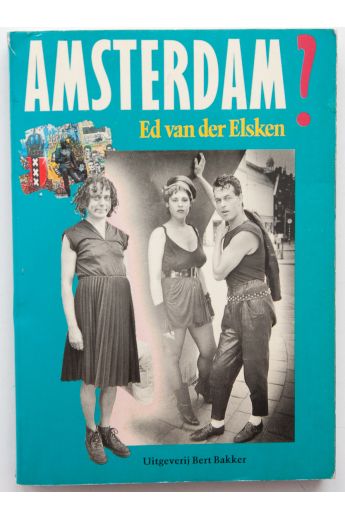 Amsterdam?€43.00
 -
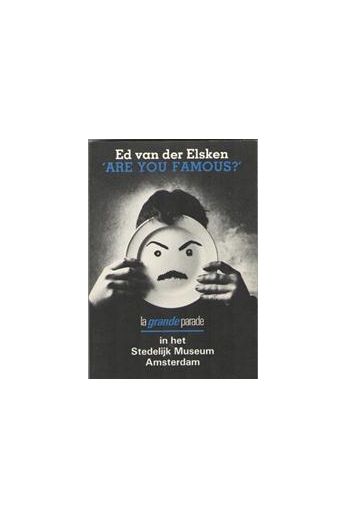 Are you Famous?€55.00
 -
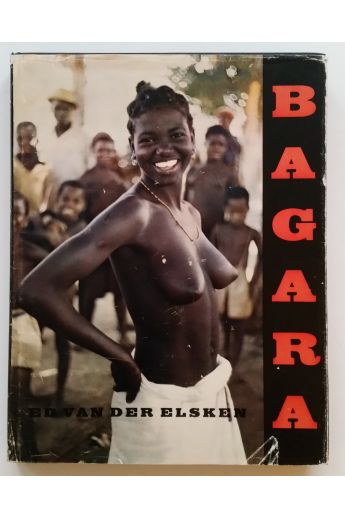 Bagara€59.00
 -
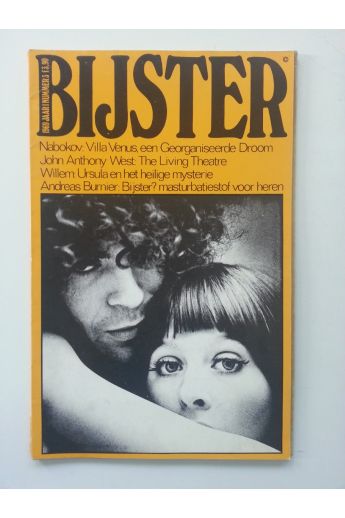 Bijster no 3 - 1969€30.00
 -
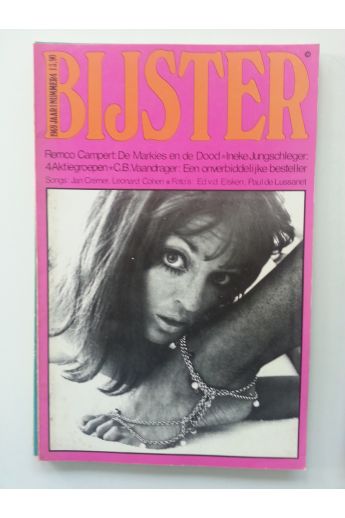 Bijster no 4 - 1969€30.00
 -
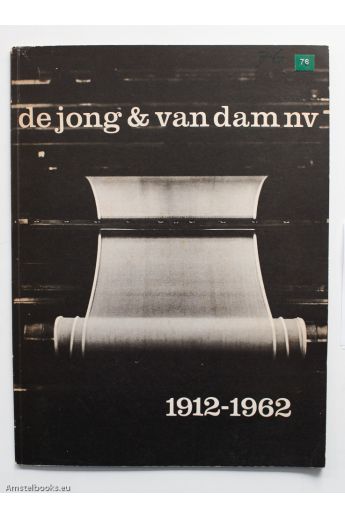 De Jong & Van Dam NV 1912 - 1962€1,850.00
 -
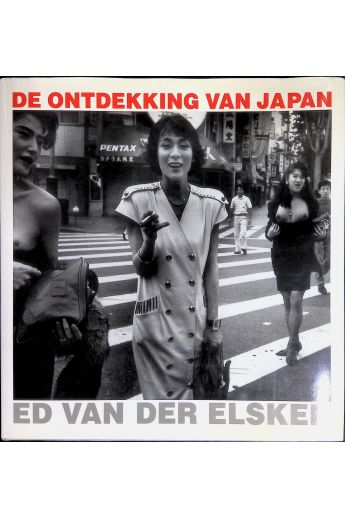 De ontdekking van japan€280.00
 -
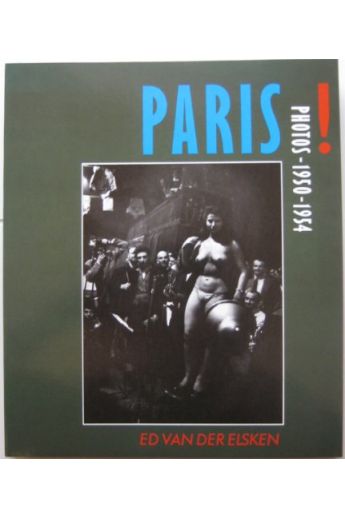 Elsken: PARIS 1950-1954€100.00
 -
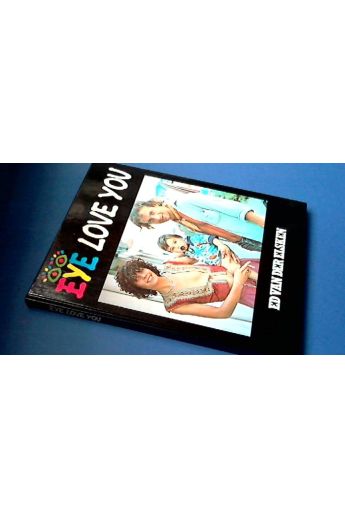 Eye love you€35.00
 -
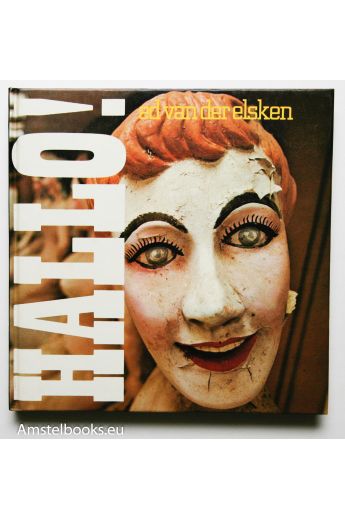 Hallo!€55.00
 -
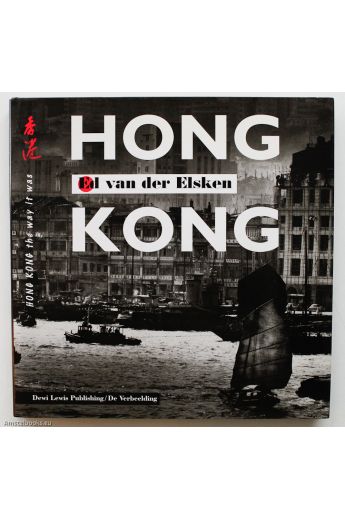 Hong Kong the Way It Was€225.00
 -
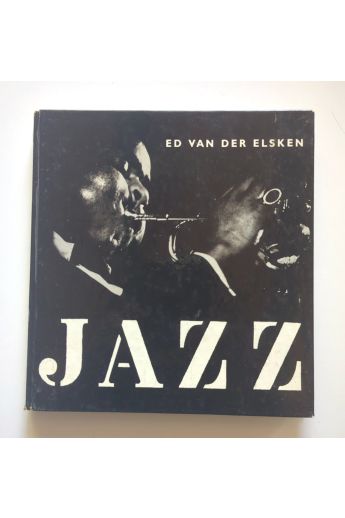 Jazz€175.00
 -
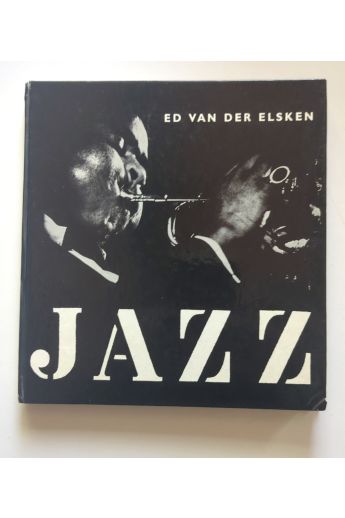 Jazz€175.00
 -
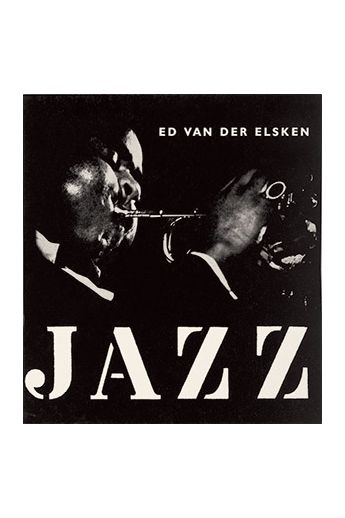 Jazz€18.00
 -
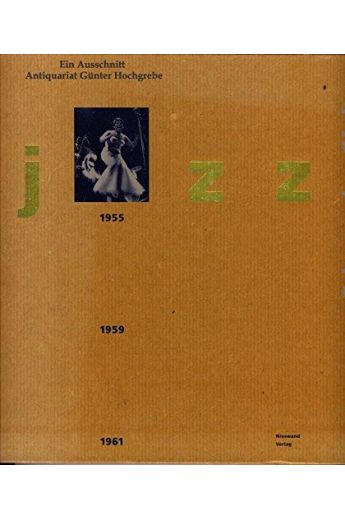 Jazz 1955 - 1959.61€15.00
 -
 Jazz 1955 - 1959.61€35.00
 -
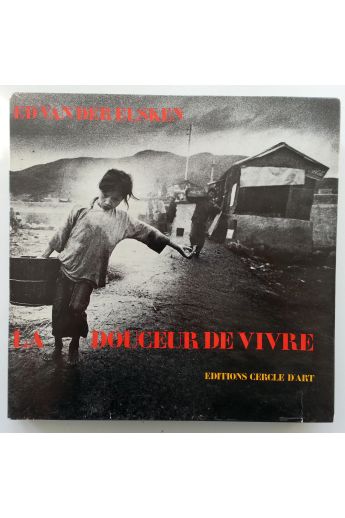 La douceur de vivre (Sweet Life)€588.00
 -
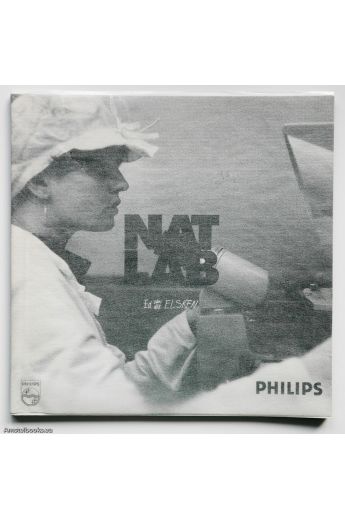 Natlab€35.00
 -
 Once upon a time€25.00
 -
 Parijs! Foto's 1950-1954€20.00
 -
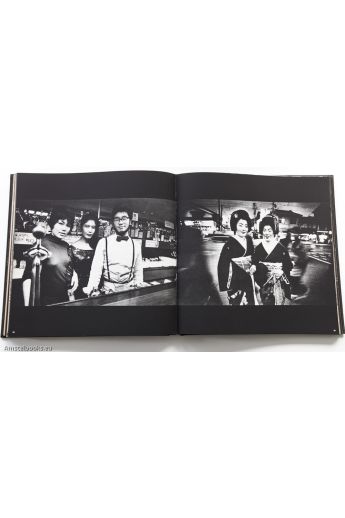 Sweet Life€150.00
 -
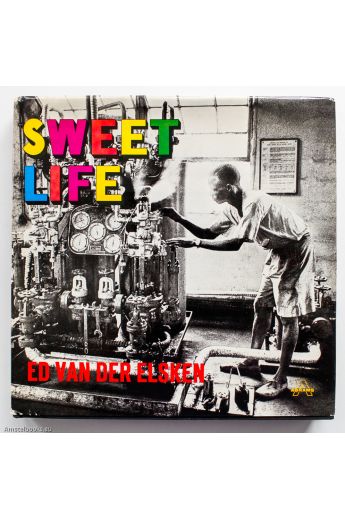 Sweet Life€127.00
 -
 Sweet Life€99.00


Works by Ed van der Elsken
- 1954 Beeldroman van het alledaagse Contribution to the Drukkersweekblad Autolijn Christmas issue.
- 1956 Une histoire d'amour à Saint-Germain des Prés Famous photo book documenting his time in Paris.
- 1956 Een liefdesgeschiedenis in Saint Germain des Prés English title: Love on the Left Bank
- 1958 Bagara Photobook concerning travels in the African jungle
- 1966 Sweet Life Photobook about a round-the-world trip
- 1981 Parijs! Foto’s 1950-1954 Book about his years in Paris
- 1984 Amsterdam? Photobook compiling street photography of Amsterdam
- 1988 De ontdekking van Japan The Discovery of Japan
Exhibitions
- 2025 Ed van der Elsken, een feest der herkenning
- 1953 Post-War European Photography
- 1966 Hee… zie je dat?
Awards
- 1988 David Roëll Prize
- 1971 staatsprijs voor filmkunst
References
- Ed van der Elsken - Wikipedia. Wikipedia link
- Ed van der Elsken - Wikipedia. Wikipedia link
- Ed van der Elsken - Biografie. edvanderelsken.nl link
- Ed van der Elsken. B&G Wiki. beeldengeluid.nl link
- Ed van der Elsken (1925-1990) Fotograaf. absolutefacts.nl link
- Evelyn de Regt. University of Leiden. 1991 link
- Wikipedia link
- Ochre Space Portfolio link